


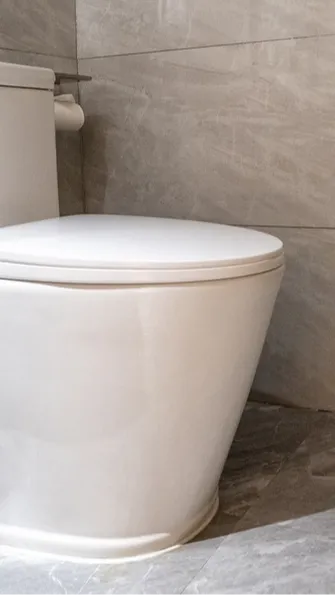
Porcelain is one of the most widely used toilet bowl materials; there is no substitute for it. A good quality toilet bowl is judged by the smoothness of its surface.
Although porcelain has a good level of smoothness, there are still materials with superior quality. Because some dirt stains still stick and need to be scrubbed and cleaned on porcelain, wasting a lot of water.
A group of scientists at Huazhong University of Science and Technology in Wuhan, China, have developed an extremely slippery new toilet bowl innovation. Almost no dirt sticks to it at all.
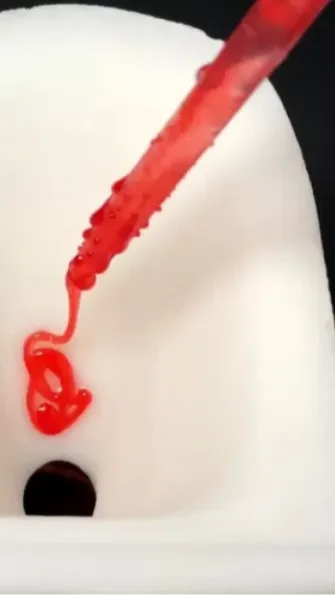
Yike Li and colleagues created a lightweight toilet bowl from plastic and hydrophobic sand grains lubricated with silicone oil for extra slipperiness.
There have been many innovations in slippery toilet bowls, but the most famous uses Teflon coating. However, it is rumored that the material is very sensitive to abrasions, so it tends to be damaged if the intensity of use is high.
While this material made by Chinese scientists is rumored to be much tougher. This is due to the structure of the material.
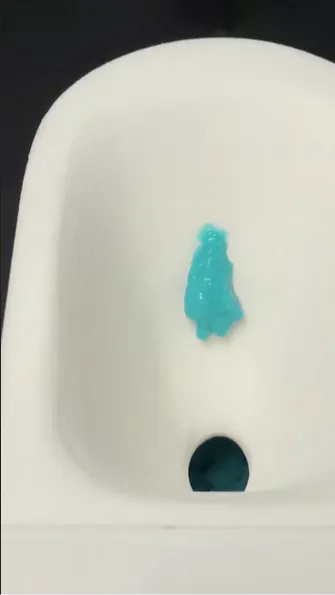
Various common wastes such as artificial feces, muddy water, milk, yogurt, honey, and gel from starch were tested on the toilet bowl. Thanks to the super-slippery structure created by Yike Li and colleagues, nothing stuck to the toilet bowl.
Even after scrubbing with sandpaper a thousand times, none of the dirt stuck, proving the toilet's slipperiness is superior to porcelain.
The toilet is called The 3D-printed Abrasion-Resistant Super-Slippery Flush Toilet (ARSSFT), now three-dimensionally printed. The test mold is ten times smaller than life size, but reportedly, the scale did not affect the experiment in any way.
This is notes